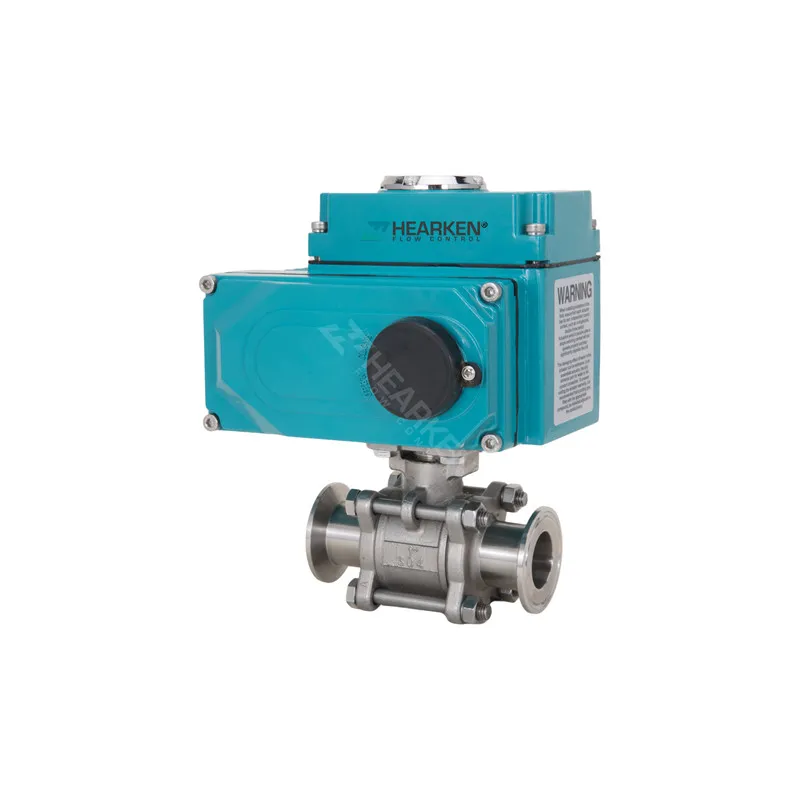
If you want to fully understand actuators, this article will provide you with expert answers. This ultimate guide covers all aspects of actuator types, selection guide, installation and more – all your concerns can be answered here.
What is an Actuator?
An actuator is an actuator that uses some type of energy converted into motion to manipulate an object or system to move or perform other forms of mechanical action.

What are the Components of an Actuator?
Different types of actuators in the components of the differences, but the basic components are roughly the same, are the power source + transmission mechanism + actuator + control unit + feedback mechanism.
- Electric actuator: motor, gear box, limit switch, control unit (such as controller), feedback mechanism (such as encoder or potentiometer)
- Pneumatic actuators: cylinders, pneumatic valves, manually operated mechanisms, position feedback (e.g. magnetic switches), air filtration and regulation units
- Hydraulic actuators: hydraulic cylinders, hydraulic valves, hydraulic pumps, pressure regulators, position sensors
What Materials are Actuators Made of?
Aluminium alloy: Popular in the market for its light weight, high strength, good corrosion resistance and ease of machining and forming, aluminium alloy is widely used in the manufacture of actuator housings and structural components.

Stainless Steel: Due to its corrosion resistance and high heat resistance, stainless steel is commonly used in applications in extreme environments such as oil, gas, and chemicals.
Composites: Due to their excellent mechanical properties and corrosion resistance, composites are expanding their application areas, especially in applications requiring high strength and light weight.
Copper alloys: Due to their excellent electrical and thermal conductivity, copper alloys are commonly used in electrical and electronic components and marine systems.
Cast iron: Due to its high strength properties, cast iron is suitable for applications that require heavy loads.
Plastics: Plastic materials are a cost-effective choice due to their good insulating properties and corrosion resistance.

Ceramics: Ceramic materials have a place in precision instruments, aerospace, biomedical and microelectromechanical systems (MEMS) due to their high precision, fast response, insulating properties and long life. In particular, ceramic materials such as alumina are favoured in the biomedical field due to their good biocompatibility.
The commonly used materials for sealing parts of actuators are rubber, polyurethane, PTFE, silicone rubber, fluorine rubber FPM, neoprene CR, and stainless steel is also used as a sealing material in cases where high temperature corrosion resistance is required.
What is the Working Principle of an Actuator Valve?
Actuator valves, meaning valves driven by actuators, are used to control the position of the valves, thereby managing the flow or stopping the flow of fluids or solid materials. The existence of actuator valves greatly facilitates the automation control process, improving the convenience and accuracy of control. In addition, through remote control, actuator valves can also ensure the safety of operators because it reduces the need for personnel to directly contact potentially hazardous environments.
What is the Function of an Actuator?
Actuators, as part of an automation system, are commonly used in industry as well as in various automation applications, where they are indispensable for a variety of applications through energy conversion for motion manipulation.

Capabilities of a Actuator
- Valve control: the actuator is used to control the position of the valve and thus manage the flow of the fluid.
- Automation: The actuator operates automatically by receiving electrical or pneumatic signals, enabling automated control without manual intervention.
- Positioning: The actuator enables precise positioning during the manufacturing process.
- Regulation: The actuator regulates the operation of the automation system by applying force or torque.
- Safety: In case of malfunction or emergency, the actuator can shut down or stop operation to ensure safety.
- Feedback: Some actuators are equipped with feedback modules that provide monitoring data such as position, speed or force to help better control the system.
- Versatility: Actuators can perform a variety of motions such as linear, rotary or multi-axis motion.
- Durability: Actuators are designed for use in harsh environments and are resistant to corrosion, heat and high pressure.
- Integration: Actuators can be integrated with control systems and networks, allowing operators to macro-manage the entire automation process.

Examples of Actuators in Real-world Applications
Actuators are ubiquitous in real-world applications. For example, in cars automotive applications, actuators are used to manipulate the HVAC system, regulating the temperature and air circulation in the vehicle to ensure passenger comfort. Similarly, in the trains and trams we encounter every day, actuators manage key functions such as train movement and positioning to ensure our travelling safety.
And in home applications, actuators are used in a wide range of ways, allowing us to control smart devices in our homes, such as lights and curtains, as well as being able to monitor energy and water management in real time through smart home control.
What are the Benefits of Actuators?
- Precise control: Ability to pinpoint position and stop accurately via data signals
- Feedback mechanism: Featuring a feedback unit for continuous feedback
- Programmable: Can be reprogrammed many times to achieve different objectives and provide stable and consistent control.
- Safety: In the event of an emergency, the actuator stops or shuts down, reducing labour costs and risk to personnel.
- Low Maintenance: Reduces maintenance and replacement costs from a long-term investment perspective.
- Intelligent Integration: Actuators can be integrated as part of an automation system, allowing personnel to perform multiple operations in one location.
- Compact design: Actuators are available in a variety of sizes, choose a linear actuator or a small compact actuator that fits perfectly into tight spaces to meet your automation needs.
- Sustainability: Actuators have a long service life and low replacement costs.

What are the Disadvantages of Actuators?
- Cost: Actuators for special applications (e.g., explosion-proof or chemical environments) can be costly.
- Maintenance Requirements: Regular maintenance and inspections are required, which may increase operating costs.
- Response time: Actuators may respond at different speeds, and slow response may affect fast-moving scenarios such as automated production lines.
- Complexity: Integration may require specialised knowledge and may be difficult for non-technical users.
- Risk of malfunction: Actuators can fail for a variety of reasons and require prompt troubleshooting.
- Compatibility issues: Actuators may not be compatible with all valves or control systems, which needs to be confirmed before purchasing.
- Environmental adaptability: Actuators for ac vary in their adaptability to extreme environments, which may affect performance under extreme conditions.
What are the Applications of Actuators?
- Oil and gas: actuators are used in all three stages of extraction, transmission and processing.
- Chemical industry: to ensure safety during chemical reactions
- Water and wastewater management: in wastewater treatment plants and water supply systems.
- Power industry: in boiler and turbine systems
- Heating, ventilation and air conditioning (HVAC) systems: to regulate ambient temperature and airflow
- Food and beverage industry: hygienic applications for the transport of raw materials
- Pharmaceutical industry: for precise dosage control in the pharmaceutical process.
- Paper industry: temperature and humidity as well as flow direction during paper production to ensure paper quality
- Marine and offshore engineering: Ballast water systems for ships and fluid control systems for offshore platforms.
- Mining industry: responsible for the delivery of ore
- Agricultural irrigation systems: overall management of the network of water delivery systems, ensuring the flow of water.
- Automotive industry: painting and assembly lines
- Aerospace: hydraulic systems for aircraft and spacecraft

What are the Different types of Actuators?
The three common types of actuators include electric, pneumatic, and hydraulic actuators. Less common are Piezoelectric Actuators, Thermal Actuators, Magnetic Actuators, Mechanical Actuators, and Ultra-Spiral Actuators, Mechanical Actuators, Ultra-Spiral Actuators, these actuators are mainly targeted at specific applications.
Hydraulic vs Pneumatic vs Electric actuators
- Speed
Pneumatic actuators offer the highest speeds but are not as accurate in speed control as electric actuators, hydraulic actuators have the next highest speeds but excel in high thrust applications.
- Cost price
Hydraulic actuators > electric actuators > pneumatic actuators
- Temperature Range
Hydraulic actuators excel in extreme temperatures, electric actuators are able to accommodate most temperature ranges as a second choice, and pneumatic actuators perform relatively low in extreme temperatures due to being pneumatically actuated.
- Accuracy
Electric actuators have higher control accuracy than pneumatic actuators, while the control accuracy of hydraulic actuators depends on the design.
- Safety
Pneumatic actuators are suitable for use in flammable and explosive environments because of their design, while electric actuators are explosion-proof versions for use in extreme environments. Hydraulic actuators perform well in terms of safety, but do need to be protected from fluid leaks.
- Design
Electric and hydraulic actuators have complex designs, while pneumatic actuators have simple designs.
- Purpose
Pneumatic actuators for fast action and simple control, electric actuators for precise control and hydraulic actuators for high thrust applications.
- Applications
Pneumatic actuators are used in light industry, electric actuators for precise control and hydraulic actuators for heavy industry.
- Adaptability
Electric actuators are the most adaptable and can be used in a wide range of environments and are not affected by most temperatures, pneumatic actuators need to be in an environment with a good air supply and hydraulic actuators operate reliably in harsh environments.
- Repetitive operation
Electric actuators are suitable for frequent repetitive operations, especially for precise control. Pneumatic and hydraulic actuators are prone to wear and tear during high frequency operation.

How Do I Choose Which Type of Actuator I Need?
Choices can be made based on the design purpose and advantages of the three types of actuators.
Hydraulic actuator is synonymous with heavy industrial and high thrust applications; for precision control, choose an electric actuator; and a pneumatic actuator is suitable for environments with a good supply of air, but is not suited to frequent repetitive operations.
What Should You Consider When Choosing an Actuator?
- Type of motion
Linear, rotary or other motion
- Expected load
Calculate the expected load to select the appropriate actuator
- Environment-specific requirements
Whether the actuator is used outdoors, waterproof, explosion-proof, corrosion-resistant, hygienic, high-temperature operation and other needs.
- Silence requirements
If there is a need for silence, electric actuators are a good choice.
- Accuracy
Confirm the working accuracy, higher accuracy will waste more unnecessary cost.
6. Duty Cycle
Duty cycle is an important factor to select the actuator, you can select the actuator by this factor, which can make the actuator keep a long life.
Electric actuators have a higher duty cycle and can run continuously without overheating, while pneumatic actuators have a relatively low duty cycle and are not suitable for long-term repetitive work.
- Responsiveness
Pneumatic actuators are the most responsive, followed by hydraulic actuators, and electric actuators are not as responsive due to the need for an electric drive for applications that require fast switching.
- Integration
Choose an actuator that is easy to integrate into your automation integration system.
- Available Mounting Space
Measure the available mounting space and select the right size actuator.
- Shock and Vibration
In environments where shock and vibration are high, hydraulic and pneumatic actuators are better suited because they are more resistant to shock and vibration, while electric actuators require additional damping measures.

The Difference between Actuators vs Motors
The main difference between actuator and motor is their purpose. The main function of a motor is to provide rotational power, usually used to drive rotational motion, while the role of an actuator is to convert input signals (such as electrical energy, air pressure or hydraulic energy) into specific mechanical motion, which can be linear, rotational or other forms.
Step by Step to Install the Actuator
- Step1: Prepare installation tools
- Step2: Ensure that the installation environment and installation parts are clean and dry.
- Step3: Install the bracket or foundation: most of the actuators need the bracket or foundation to resist the pressure and vibration of the actuator work.
- Step4: Connect the power source
Connect the power source according to the type of actuator, electric actuators need to connect the power supply and install the motor vs controller, pneumatic actuators connect the air source and check the organs, hydraulic actuators connect the hydraulic pipeline and check the hydraulic oil.
- Step5: Installation of control devices
Installation of control devices, such as controllers vs solenoid valves, sensors and other equipment
- Step6: Install limit switches or position sensors
If you have configured limit switches or position sensors, make sure the limit switch positions are set correctly.
- Step7: Calibration and Commissioning
Check and calibrate all connections and perform preliminary tests.
- Step8: Maintenance and inspection
After completion of the installation, regular maintenance checks are required to ensure the life of the actuator.

How to Test an Actuator?
1. Visual inspection
Check the integrity of the actuator housing by visual inspection for defects such as cracks, corrosion, damage or deformation.
2. Pressure and Leak Testing
Pressure and leakage tests are usually carried out using a helium leak detector, ultrasonic leak detector or pressure change detection, and are used to assess the sealing and strength of the actuator under pressure conditions.
3. Functional tests
Tests whether the actuator can open, close and operate properly.
4. Response time test
Tests the response time of the actuator after receiving a signal. This test is critical for applications that require a fast response time.
5. Environmental Test
Environmental testing includes evaluating performance under extreme conditions such as high temperature, low temperature, humidity and salt spray.
6. Travel Test
Measures the range of motion and accuracy of the actuator to ensure it meets design requirements.
7. Dynamic Testing
Dynamic testing evaluates the performance of the actuator during motion, including parameters such as speed, acceleration and vibration.
8. Shock Testing
Impact testing is particularly important in industrial environments and is used to simulate the performance of an actuator when it is subjected to mechanical impact and to assess its impact resistance and structural strength.
9. Mechanical Durability Test
Evaluates the life and reliability of an actuator by simulating actual conditions of use.
10. Salt and Chemical Test
Tests the actuator’s corrosion resistance and resistance to chemical substances.
11. Ingress Protection Test / Protection Rating (IP)
Evaluates the actuator’s level of protection against solid particles and liquids according to international standards (IP) to meet the requirements of specific application scenarios.
12. Climate test (temperature and humidity)
Evaluates the performance of the actuator under different temperature and humidity conditions.
13. Electromagnetic compatibility
Tests the actuator’s performance in an electromagnetic environment to ensure that it complies with electromagnetic compatibility standards.
14. Torque Load Test
Tests the torque output performance of the actuator under different load conditions.
15. Torque Switch Setting Test
Test whether the torque switch can act normally under the set torque value.
16. Operation Under Load Test
Evaluates the performance and reliability of the actuator under load conditions.
17. Stall Capability Test
Evaluates the performance of the actuator under stall conditions and its protection mechanism.
18. Gear Efficiency Specification Test
Tests the efficiency and performance of the gearing within the actuator to ensure that it meets the design requirements.
19. Certification
Comprehensive assessment of the actuator against relevant standards (e.g. ISO, CE, etc.) to ensure compliance with industry requirements.

10 causes of actuator failures and solutions
- Overload
Exceeding the rated load capacity of the actuator may result in internal damage.
Solution: Replace the actuator with a higher load or add an overload protection device.
- Environmental factors
Operating in extreme environments may affect the performance of the actuator.
Solution: Check whether the material and protection level of the actuator are suitable for working in this environment, if not, it needs to be replaced or increase the protection measures, such as sealed housing or anti-corrosion coating.
- Improper maintenance
Failure to carry out regular maintenance (e.g. lubrication, cleaning or inspection) may result in a deterioration of the actuator’s performance.
Solution: Establish a regular maintenance programme
- Electrical Problems
Electrical problems such as surges, voltage fluctuations or short circuits.
Solution: Install over-voltage protection devices and voltage regulators, and replace them if overheating or damage is found during inspection.
- Physical shock
Physical shock during operation may cause damage to the actuator.
Solution: Bracket or foundation can be added to the actuator installation to avoid direct impact.

- Wrong size of valve packing
The valve packing is not properly sized (too large or too small).
Solution: Select the proper packing and ensure that the packing is installed correctly.
- Worn valve stem
Worn valve stems may cause the actuator to not function properly.
Solution: Replace or select a more durable valve stem material
- Too much torque
The actuator torque setting is too high or too low.
Solution: Adjust to the correct torque
- Contamination in the valve
Contamination (e.g. dust, impurities) inside the valve may cause the actuator not to work properly.
Solution: Clean regularly or install a filter
- Obstruction and lack of power
Problems with the power supply (e.g. motor failure, thermal overload, blown fuse) result in power not reaching the actuator.
Solution: Check the power supply wiring to ensure that it is working properly and replace any damaged parts in a timely manner
How to Perform Daily Maintenance on Actuators?
To ensure the life and performance of your actuators, regular maintenance checks are essential. In the long run, proper maintenance not only extends the life of your equipment, but also provides significant cost benefits. During regular maintenance, you will need to check the following items to ensure that the actuator remains in optimum condition:
- Check all fasteners (bolts, screws and nuts) for looseness.
- Check the output rod for wear and replace if necessary.
- Inspect the actuator surface for corrosion, leaks, or other visible defects.
- Open and close the valve manually to ensure smooth operation and no jamming.
- For explosion-proof actuators, check that the flame path is complete to ensure compliance with explosion-proof requirements.

- Conduct manual and remote operation tests to ensure that the control function of the actuator is normal.
- Depending on the type of actuator, ensure proper lubrication to reduce wear and prolong service life.
- Clean actuator surfaces and critical components regularly to prevent accumulation of dust and impurities.
- For pneumatic actuators, check for internal and external leakage in the diaphragm chamber.
- For electric actuators, check for grounding and coil heating.
What are the Actuator Control Systems?
The definition of actuator control system is the system used to control the operation of the actuator, which can determine the direction, speed, force and other operating parameters of the actuator. There are many types of actuator control systems for engineers to choose from, including manual control and automatic control, open-loop control and closed-loop control, start-stop control and multi-function control systems.
Step-by-Step Guide to Designing Your Own Actuator
Actuator design requires the following steps to ensure performance and reliability:
Step1: Requirements Analysis
Define the objectives of the actuator, including the type of motion (linear or rotary), the application, and the operating environment.
Step2: Selection of actuator type
Determine the actuator’s protection class and material selection based on the type of power source (electric, pneumatic, or hydraulic) and environmental factors (temperature, humidity, explosion-proof, chemical exposure, etc.).
Step3: Calculation and selection
Calculate the required load, force/torque range, and determine the stroke length and speed of the actuator.
Step4: Design Calculations
Perform force and torque calculations based on actuator type (efficiency and losses need to be considered). The calculation formula is as follows:
Linear actuator: F = m × a (force = mass × acceleration)
Rotary actuator: τ = F × r (torque = force × radius)
Step5: Component Selection
Select a suitable power source (e.g., electric motor, hydraulic cylinder, or air pump) and feedback and control components.
Step6: Simulation and Verification
Simulate actuator performance using CAD software or mathematical models, and test and optimise in real-world environments.
Step7: Material and process selection
Selection of suitable materials for actuators (e.g. aluminium alloys, stainless steel, copper alloys, plastics, etc.) and determination of manufacturing processes (e.g. machining, casting, forging, injection moulding, etc.).

Step8: Safety and Reliability Design
Design overload protection mechanisms to ensure that the actuator can shut down or stop working in dangerous situations.
Step9: Cost Assessment
Evaluate and optimise the design as a whole, balancing performance and cost.
Step10: Documentation and Standardisation
Documentation of actuator design data, generation of PDF files for subsequent maintenance and upgrades, and ensuring actuator compliance with industry standards.
The World’s Top 5 Actuator Companies
1. MOOG
MOOG Founded in 1951 by Bill Moog, Art Moog and Lou Geyer in East Aurora, New York, USA and headquartered in Buffalo, New York.The symbol is a capital “M”
2. PHD Inc.
Located in Fort Wayne, Indiana, U.S.A., the company specialises in pneumatic and electric actuators, linear slide tables and other products.
3. Tolomatic, Inc.
Electric actuators suppliers, brands Founded in 1954 and headquartered in Minnesota, U.S.A. The main products include electric and pneumatic linear actuators.
4. Valworx
Founded in 1991, Valworx is known for its compact electric and pneumatic actuators and offers a wide range of industrial control solutions.
5. Hearken Flow
Actuator manufacturer from China, providing electric and pneumatic actuators, electrically/pneumatically actuated valves and related accessories, as well as OEM/ODM services, and professional solutions for various application areas.

Global Actuator Market Trends 2025
Currently the global actuator market is showing a trend towards intelligence and integration, I will analyse the actuator market trends in 2025 for you in four parts, including market dynamics, market restraints, market opportunities, and regional analysis:
- Market Dynamics
Demand is steadily rising in North America, Europe and Asia-Pacific, and the global actuator market is now showing the trend of intelligence, networking and integration. According to statistics, the global actuator market size grows from $67.7 billion in 2024 to $94.8 billion by 2029.
- Market Restraints
With the global emphasis on environmental protection, the actuator industry is being guided by the need to strictly comply with new environmental standards. In addition, the rapid development of automation integration brings the challenge of technology renewal, and companies need to continuously invest in research and development to adapt to the fast-changing technological environment.
- Market Opportunities
The booming development of new energy and smart manufacturing sectors has brought new growth points for the actuator market. Smart actuators are gradually occupying a larger market share due to their high precision, remote monitoring, and fault diagnosis. Especially driven by Industry 4.0 and smart manufacturing, the application of electric actuators in energy management, building automation, robotics, and healthcare is increasing.
- Regional Analysis
The global actuator market is mainly concentrated in North America, Europe, and Asia Pacific. Asia Pacific is the fastest growing region due to the advancement in industrial automation and infrastructure development. The North American and European markets, on the other hand, have maintained a steady demand for high-end actuators due to their technological advantages and mature industrial base. In addition, as the industrialization process in emerging markets such as India and Brazil accelerates, the demand for actuators and related job positions is also gradually increasing..
FAQs
Can an Actuator be Repaired?
Actuators can certainly be serviced. For simple problems, manual repairs not only reduce downtime, but are also more cost-effective. However, for complex faults, it is advisable to contact a specialised technician or the manufacturer for diagnosis and repair to ensure the safety and performance of the equipment.
Will Disconnecting the Battery Reset HVAC Actuators?
Disconnecting the battery does reset the HVAC actuator in general, this is a recalibration of the actuator. Different actuators may be calibrated differently, check the actuator manual or contact the manufacturer or fabricator.